

What if the business you built to create freedom is growing while your life quietly gets smaller?
[The host of The Deep Wealth Podcast and post-exit entrepreneur Jeffrey Feldberg speaks with Craig Ceccanti, Founder and EOS Implementer.](https://podcast.deepwealth.com/588 “”)
There is a dangerous stage in entrepreneurship that does not look dangerous at all.
Revenue is growing. Customers keep coming. More people join the team. From the outside, the business looks successful.
Yet inside the company, something very different can be happening.
Every important decision still finds its way to you.
Your team waits for answers.
Your calendar fills faster than you can clear it.
You start missing moments at home because the business has another emergency only you can solve.
And because the numbers still look good, you tell yourself this is what success feels like.
Craig Ceccanti learned how expensive that belief can become.
## When Growth Starts Taking More Than It Gives
Craig helped grow Pinot’s Palette from an idea into a franchise with approximately 150 locations.
That is the kind of growth most founders dream about.
Yet Craig describes what was happening behind the growth simply: “It was running our lives.”
He was working 60-hour weeks and wearing multiple hats.
Then came the moment that stripped away any illusion that this was normal.
Craig’s twin daughters were celebrating their third birthday after significant health challenges. The family had gone all out. Baby horses were there for the children to paint. The party was about to begin.
Then the call came.
The company’s technology system had crashed.
Craig left the birthday party to fix it.
That is not simply a story about work-life balance.
It is a business warning.
Craig realized, “I was a bottleneck that shouldn’t have been there.”
A founder who must abandon an irreplaceable family moment because the company cannot function without them does not have a time-management problem.
They have a company-design problem.
## Success Can Hide Founder Dependency
Here is where founders can get trapped.
In the early days, your willingness to do everything is an advantage.
You sell.
You hire.
You solve customer problems.
You fix systems.
You make the call no one else wants to make.
That founder intensity gets the company off the ground.
But what creates the first stage of success can become the skeleton that prevents the next one.
Craig describes the shift clearly. The founder’s first job is to build a product, bring it to market, and create demand.
Then the game changes.
You are no longer only building the product.
You are building the company.
Many founders miss that transition.
They keep using the same operating style that worked when there were five people, even when there are 50.
The result is predictable.
Decisions slow down.
People become frustrated.
The founder works longer.
Growth becomes harder.
And eventually the business hits what Craig calls a ceiling.
You may call it a revenue plateau.
A future buyer may call it owner reliance.
Either way, the source can be the same.
You.
## Your Team May Already Know What Is Wrong
Here is another uncomfortable founder mirror.
Your team may already know where the real problems are.
They may know which decisions are getting stuck.
They may know which processes are broken.
They may even know that your newest idea is distracting everyone from the priority you announced two weeks ago.
But they are not telling you.
Craig says leadership teams are often fully capable of solving their problems. The issue is that “they’re not on the table.”
Someone is holding back.
Someone is afraid of the CEO.
Someone does not believe an honest answer will be welcomed.
Now the founder has two problems.
The first is the business issue itself.
The second is the loss of information required to solve it.
That is where trust becomes commercial.
A lack of vulnerable, honest conversation does not stay in the culture column.
It eventually shows up in execution, retention, customer experience, profit, and enterprise value.
## The Shiny Object Has A Price
Founders are often visionaries for a reason.
We see opportunities before everyone else.
We connect dots.
We get excited.
That can be an extraordinary X-Factor.
It can also become expensive when no one protects the company from our own enthusiasm.
Craig describes what happens when the visionary is still responsible for keeping the trains on time.
A new shiny object arrives every few days.
Priorities move.
Employees lose clarity.
Yesterday’s important project suddenly competes with today’s exciting idea.
Your people stop knowing what a good job looks like.
The founder experiences this as creativity.
The team can experience it as chaos.
That distinction matters.
One of the strongest ideas from Craig’s experience is the value of pairing the visionary founder with what EOS calls the integrator, the person who keeps execution, accountability, and day-to-day operations moving.
Craig calls the pairing a “dynamic duo.”
Think gas pedal and brake.
Too much brake and the business goes nowhere.
Too much gas and eventually you hit something.
## Think Like Your Future Buyer Before You Need One
This is where the conversation becomes especially important from a Deep Wealth perspective.
Craig identifies owner reliance as one of the major issues a buyer will examine.
That should get your attention even if you have absolutely no plans to sell.
Why?
Because a company that cannot operate without the founder is not only harder to sell.
It is harder to scale.
It is harder to lead.
It is harder to take time away from.
It concentrates knowledge, relationships, decision making, and risk in one person.
That is not freedom.
That is a single point of failure wearing a founder title.
Here is the only in Deep Wealth reframe.
Building a business that can run without you is not an exit strategy.
It is a business-quality strategy.
Your future buyer simply forces you to see what your calendar has been trying to tell you for years.
The same structure that creates more freedom today can strengthen scalability, leadership depth, resilience, deal certainty, and enterprise value tomorrow.
Profitable now and ready later are not competing goals.
Done correctly, they reinforce one another.
## The Hardest Person To Replace May Be You
Founders tend to assume that stepping back means abandoning the company.
Craig offers a different perspective.
As the business grows, there may come a point when the founder is no longer the best person for the CEO role.
That statement can sting.
It can also unlock enormous value.
Craig asks the founder to consider a better question: where can you create the greatest value for the company now?
Maybe that is still CEO.
Maybe it is innovation.
Maybe it is relationships.
Maybe it is market disruption and long-term vision.
The goal is not to preserve your title.
The goal is to build the strongest company.
That requires enough self-awareness to recognize when yesterday’s winning role has become today’s constraint.
## There Is Another Exit Few Founders Prepare For
Craig also reveals another hidden consequence of building a company around yourself.
One day the company may no longer need you.
Or you may sell it.
Then what?
Craig had a two-week transition after his exit.
After 13 years of identity wrapped around the company, suddenly he was looking at the bank account asking, “What do I do now?”
The company had consumed enormous amounts of time, attention, identity, and purpose.
Removing it created a vacuum.
That is why preparation is not only about the transaction.
It is also about the founder who wakes up the morning after it.
If the business has been your identity, your community, your challenge, and your source of significance, the money alone will not replace those things.
Craig learned that lesson through what he describes as years of walking through the desert before finding his next calling.
## The Question Worth Asking Now
Look at your business through a different lens.
If you disappeared for 30 days, where would things break?
What decisions would stop?
Which relationships depend entirely on you?
Which team members would finally make decisions they have been waiting for permission to make?
Where has your family already learned to expect the business to win?
Those questions are uncomfortable because the answers reveal the distance between owning a company and being owned by one.
Craig’s story proves that you can change the structure.
You can install better systems.
You can build leadership depth.
You can stop being the answer to every question.
You can create a company that grows without requiring your life to shrink in equal proportion.
But first you have to recognize the bottleneck.
## Hear The Full Conversation Before The Cost Compounds
This episode goes deeper into the founder transition from product builder to company builder, the leadership-team trust most companies overlook, the visionary and integrator relationship, post-exit identity, family, AI, and why experienced help can save years of expensive scar tissue.
If your company is growing while your calendar, relationships, or freedom are moving in the opposite direction, do not dismiss that as the price of success.
It may be the warning.
The most expensive founder blind spots rarely announce themselves as disasters.
They usually look like success right up until the bill arrives.
## Stop Trading Your Life for Revenue You Cannot Enjoy
Craig’s story is not unique. Plenty of founders hit the same wall between growth and a life that still fits. The difference is whether you wait until the system crashes on your kids’ birthday or you install the operating system while you still have options.
[Listen to the full episode with Craig Ceccanti on The Deep Wealth Podcast. Subscribe so the next episode reaches you automatically. Your business can keep growing. Your life does not have to keep shrinking.](https://iapdw.com/podcast “”)
\*\*
Whether you plan to keep your business or sell it one day, build it so it can thrive without you.
In 90 days, Deep Wealth Mastery helps you uncover the blind spots, profit leaks, and hidden strengths that make your company stronger, more profitable, and more valuable.
The ONLY system built from a 9-figure exit deal.
[Start your Deep Wealth Mastery journey here](https://iapdw.com/prosper “”)\*\*
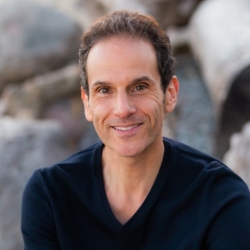
Today, Feldberg's passion is helping you extract your deep wealth. The 90-day Deep Wealth Mastery program helps create a solid foundation for three areas: increasing profits to enterprise value and optimizing post-exit life. Deep Wealth Mastery offers strategies and insights drawn from Feldberg's rich experience. The strategies from the trenches get results. Jeffrey's vision is to increase the social fabric of society one entrepreneur at a time.
Learn more through https://iapdw.com/prosper
