
What if your biggest hiring mistake happens months before you ever post the job?
[The host of The Deep Wealth Podcast and post-exit entrepreneur Jeffrey Feldberg speaks with Ryan Englin, Founder & Hiring Expert.](https://podcast.deepwealth.com/596 “”)
## The Hiring Problem You Notice Too Late
You know the pattern.
Someone resigns.
A key role suddenly opens.
Your leadership team feels the pressure immediately.
Now the clock is running.
Customers still expect results. Revenue targets have not moved. The rest of the team is absorbing extra work. You are asking everyone who they know, opening job boards, calling recruiters, and hoping the right person happens to be looking at exactly the right moment.
Sound familiar?
For many founders, that is called recruiting.
Ryan Englin sees it differently.
By the time the role is open and the pressure is real, you may already be late.
That is the first founder recognition moment in this conversation.
The question is not simply, “How do I hire better?”
The better question may be, “Why was I waiting until I needed somebody before I started building the relationship?”
## The Hidden Cost Is Bigger Than An Empty Seat
An open role is visible.
The deeper costs usually are not.
Ryan points to what he calls a revenue leak created by low productivity, disengagement, turnover, weak leadership, and the wrong people staying in the wrong roles.
His warning is simple: hiring more people into a broken system can make the problem larger.
As Ryan puts it, “You bring in more people, you just create a bigger leak.”
That is where this episode moves beyond recruiting.
A founder sees an empty position and assumes the problem is talent supply.
But the business may actually have a trust problem.
A leadership problem.
A culture problem.
A founder dependency problem.
And every one of those problems can show up later as slower growth, margin pressure, customer frustration, execution drag, or weaker enterprise value.
That is not an HR inconvenience.
That is a business model issue.
## Ryan Englin Learned This From The Founder Trap
Ryan’s perspective did not begin in a recruiting department.
It began watching his entrepreneur father live inside a business that consumed him.
The dream was familiar: build the company, make more money, gain more freedom.
The reality looked different.
Long days.
Constant responsibility.
Little separation between the founder and the business.
Ryan eventually saw the pattern. His father had employees, but he never built the kind of team he could fully trust.
That belief will sound familiar to many successful founders:
“If I want it done right, I have to do it myself.”
Ryan says the challenge is that founders often reinforce the very dependency they complain about.
“We’re always in their work. We’re always watching over them. We’re always second-guessing them.”
That can feel like high standards.
It can also become the ceiling on the company.
## Your Job Board May Not Be The Real Problem
Here is the dangerous assumption.
Founders often believe there are not enough good people available.
The economy is tight.
Talent is scarce.
Nobody wants to work.
Ryan turns that thinking around.
He says it is easier to blame the labor market because then the founder becomes the victim.
But what happens when the real issue is weak employee engagement, low productivity, toxic behavior, poor leadership, or a company that talented people simply do not want to join?
Now the problem is closer to home.
That is uncomfortable.
It is also powerful.
Because a problem you own is a problem you can change.
And this is where Ryan offers one of the strongest reversals in the episode: sometimes the hiring problem does not begin with attracting outsiders.
It begins with becoming a company worth joining.
## Think Like A Future Buyer Before Your Next Hire
Here is the only in Deep Wealth reframe.
A future buyer is not going to be impressed because you are personally exceptional at recruiting, selling, fixing problems, or saving the day.
A future buyer wants to know whether the company consistently attracts, develops, and keeps strong people without depending on the founder’s heroics.
That distinction matters.
If every important hire depends on your personal network, your intuition, or a frantic search after somebody leaves, you do not have a talent system.
You have founder dependency wearing an HR costume.
And founder dependency is a skeleton.
It can restrict scalability today and weaken the story a buyer sees tomorrow.
The Rembrandt is the opposite.
Imagine a business where strong people already know who you are.
They follow the company.
They understand the culture.
They see employees growing.
They have watched you before you even know their names.
Then one day, when the right role opens, you are not starting from zero.
You already have a bench.
That is an asset.
When owners come to Core Matters, the first phase is stop the bleeding. Most already know there is someone on the team who should not be there. They are toxic. Customers cannot stand them. Other employees avoid them. Yet they produce, so the owner delays the hard conversation.
Ryan compares it to the emergency room. You do not talk about long-term diet when the patient is having a heart attack. You stabilize first. Discovery with the leadership team surfaces the immediate opportunities. The goal is simple: create enough margin that the founder or leadership team has an hour a week to actually think.
“How often are founders, they wake up, and they go until they crash.” One or two hours of clear thinking changes everything. Without that margin, every system you try to install fails.
## The Best Candidates May Never See Your Job Posting
Ryan describes passive job seekers who are not actively searching job boards.
They may be frustrated at work.
They may feel overlooked.
They may wonder whether their company has a future for them.
But they are not necessarily applying anywhere.
Instead, they notice companies.
They watch.
They follow.
They quietly compare.
Ryan describes a contractor that became intentional about building this type of visibility and reputation.
Eventually, the company reached a point where qualified carpenters were waiting for openings.
Ryan recalls the founder saying, “I haven’t had to post a job on Indeed in 12 months.”
Think about the strategic difference.
One company starts recruiting after the vacancy.
Another company has talent waiting before the vacancy exists.
Which one scales with less friction?
Which one has more leverage?
Which one looks stronger to a future buyer?
## Your Bench Starts With The People You Already Have
There is another uncomfortable twist.
You cannot market your way out of a bad employee experience.
Ryan’s system intentionally places building the bench late in the process.
Why?
Because first you have to stop the bleeding.
You have to become the employer of choice.
You need the right people in the right seats.
You need people and processes aligned.
Only then does filling the bench become powerful.
Otherwise, attracting more talent can simply feed more people into the same broken system.
This is where founders may recognize another symptom.
You keep trying to improve hiring while your best employees are quietly wondering whether they should leave.
Ryan references estimates that a large share of workers may be passively open to another opportunity.
Think about both sides of that.
Somebody else’s A player may be watching you.
Your A player may be watching somebody else.
That should change how you think about recruiting.
## The Founder Wearing Nine Hats Has Another Problem
Ryan shares what happens when his team maps an organization.
The founder’s name often appears in eight or nine boxes.
Sales.
Operations.
Hiring.
Customer issues.
Leadership.
Strategy.
Whatever nobody else owns.
The founder calls that being helpful.
The calendar calls it something else.
And the business pays for it.
Every role you refuse to transfer is another place where growth can circle back to you.
That creates decision fatigue, slower execution, leadership drag, and eventually a company that may be more difficult to scale without you.
The bench is not simply about replacing employees.
It is also about replacing pieces of the founder.
That is where the real freedom begins.
Most founders are terrible at casting vision. Employees look at the revenue and profit goals and see nothing for themselves. Ryan’s answer is the Growth Accelerator Program—a three-year personal development track. It has nothing to do with company career goals. It is about the employee’s personal goals: buy a house, start a nonprofit, buy a boat, move to a different city.
“People don’t really care about your business as much as you would think they do. What they care about is what happens to them.” When the company invests in personal goals, loyalty deepens. Studies show most people who achieve those goals stay. Even those who leave become raving fans and, in one case, collaborators who sent work back to the original company.
## Build The Bench Before You Need The Player
The most valuable idea in this episode may be the timing.
Do not wait.
Hiring becomes expensive when desperation takes over.
When you need somebody immediately, your standards become easier to negotiate.
You accept the candidate who is available instead of the person who is exceptional.
You fill the seat.
Then six months later you wonder why the team feels heavier instead of stronger.
Ryan offers a different path.
Become the employer talented people want to watch.
Give your existing people reasons to stay.
Show them opportunities for growth.
Build systems so trust does not depend on blind faith.
Create enough visibility in your market that future A players know you before you need them.
Then keep building the bench.
## Listen Before Your Next Hiring Emergency
If you are a founder who keeps saying, “Why is it so hard to find good people?” this conversation deserves your attention.
Not because Ryan offers another recruiting trick.
Because he challenges the assumption underneath the problem.
Your next great hire may not come from writing a better job posting.
It may come from building a better company.
And if you want a business that is more profitable now, less dependent on you, and more attractive to a future buyer later, that distinction matters.
Listen to the full conversation with Founder & Hiring Expert Ryan Englin on The Deep Wealth Podcast.
[Listen to the full episode now and subscribe to The Deep Wealth Podcast so you never miss the next conversation that can change how your company runs.](https://iapdw.com/podcast “”)
Because the most expensive founder blind spots are rarely the ones you already know about. The real advantage comes from seeing them before they become expensive.
That is what The Deep Wealth Podcast is built to help you do.
\*\*
Whether you plan to keep your business or sell it one day, build it so it can thrive without you.
In 90 days, Deep Wealth Mastery helps you uncover the blind spots, profit leaks, and hidden strengths that make your company stronger, more profitable, and more valuable.
The ONLY system built from a 9-figure exit deal.
[Start your Deep Wealth Mastery journey here](https://iapdw.com/prosper “”)\*\*
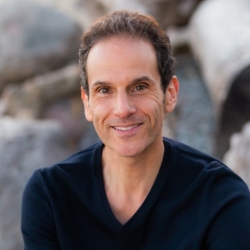
Today, Feldberg's passion is helping you extract your deep wealth. The 90-day Deep Wealth Mastery program helps create a solid foundation for three areas: increasing profits to enterprise value and optimizing post-exit life. Deep Wealth Mastery offers strategies and insights drawn from Feldberg's rich experience. The strategies from the trenches get results. Jeffrey's vision is to increase the social fabric of society one entrepreneur at a time.
Learn more through https://iapdw.com/prosper
