

Was a founder foolish for risking the equivalent of $40 million after already winning, or did he see a future most founders would have missed?
The Founder Pattern Hiding In Plain Sight
You have seen this happen.
A founder finally wins. The business works. The money comes in. The pressure lifts.
And then comes the safe advice.
Protect the money. Slow down. Do not risk what you fought so hard to earn.
There is nothing wrong with that advice. For many founders, it is the right advice. But every so often, a founder sees something the market cannot yet see. An inflection point. A shift. A problem hiding in plain sight that customers cannot fully describe yet.
That is where this episode becomes more than a business history story.
A founder had already failed more than once. He finally succeeded. He sold a prior business for about $1 million, which was roughly $40 million in today’s dollars. For most founders, that would be the finish line. Take the money. Protect the money. Enjoy the money.
Instead, he put that fortune back at risk.
Not into a proven product.
Not into a proven category.
Not into a proven market.
He bought land. He built infrastructure. He began creating a town. He prepared for workers who had not yet arrived and a future business that had not yet fully proven itself.
From the outside, that can look foolish. From the founder side, it may look familiar.
The Hidden Cost Of Waiting Until The Market Believes
Most founders wait too long.
They wait for more proof. More demand. More comfort. More certainty. More permission from the market.
But by the time the market clearly names the opportunity, the best part of the opportunity is often already gone.
That is one of the hidden costs founders rarely measure. Not lost revenue this quarter. Not a missed campaign. Something deeper.
Lost category ownership.
Lost narrative control.
Lost strategic position.
Lost enterprise value before a future buyer ever enters the room.
The founder in this episode saw America changing. People were leaving farms and moving into cities. Workers were earning wages. Families had less time to make food themselves. Food quality was inconsistent. Trust was fragile. The product category existed somewhere else, but it was not affordable for everyday Americans.
Most people saw separate facts.
This founder saw a collision.
That is the founder lesson. Market disruptions often do not begin with a brand-new idea. They begin when a founder connects dots everyone else is too busy to see.
Step 1: The Big Picture
The founder was Milton Hershey.
And before you think this is a story about chocolate, it really is not. It is a founder lesson about seeing the future before the future looks obvious.
Milton Hershey did not invent chocolate. He did not invent milk chocolate. That is not the point. The better story is that he saw a market shift before the market had language for it. He saw a customer problem before customers could fully describe it. He saw trust, affordability, consistency, and scale as one connected opportunity.
That is Step 1 Big Picture in action.
Step 1 is not fantasy. It is not positive thinking. It is not, “Wouldn’t this be nice?” Step 1 is where a founder sees an inflection point and can explain why it matters.
Fantasy says, “That could be interesting.”
The Big Picture says, “Here is the shift. Here is the problem. Here is why timing matters. Here is why the customer will care. Here is why we are positioned to win.”
Milton Hershey saw that affordable milk chocolate made with fresh milk could become more than a product. It could become a category.
The Founder Who Built Before The Answer Was Clear
Here is where the story becomes uncomfortable for today’s founder.
Hershey did not have the final answer when he began building.
He had the vision. He had the land. He had proximity to fresh milk. He had belief. But he did not yet have the final scalable formula.
That should make every serious founder pause.
Many founders do the opposite. They wait until everything is figured out before they build the infrastructure required to win. Then success arrives, and the company cannot carry the weight.
The team strains.
The customer experience cracks.
Quality becomes inconsistent.
The founder becomes the bottleneck.
Growth shows up, but the business is not ready.
Hershey built differently. He thought in systems before the market rewarded the system. Milk, land, workers, transportation, electricity, trust, taste, scale. Separate parts, yes. But together, they became an operating advantage.
That is not luck. That is design.
The Only In Deep Wealth Reframe
Here is the Deep Wealth lens.
A valuable business is not simply a business with demand. Demand matters, but demand alone can become dangerous when the company underneath it is fragile.
A valuable business has X-Factors that are real, not decorative. It has Rembrandts that customers, team members, investors, and future buyers can see. It removes skeletons before those skeletons lower profits, slow growth, weaken culture, or trap the founder in golden handcuffs.
Hershey’s location was not just land. It was supply control.
The town was not just generosity. It was workforce stability.
The trolley was not just transportation. It was operational movement.
The wrapper was not just packaging. It was media.
The product was not just chocolate. It was trust made repeatable.
That is what founders miss when they are too close to the business. The ordinary touchpoint may be the hidden Rembrandt. The annoying constraint may be the future X-Factor. The risk everyone else avoids may become the moat, if the founder has the discipline to build around it.
The Dangerous Assumption Founders Make About Risk
Most founders think risk is the thing to avoid.
That is only partly true.
The real question is not whether risk exists. Risk always exists. The real question is whether the risk is visible, understood, and designed around.
Fresh milk could have been a skeleton. It spoils. It complicates manufacturing. It makes consistency harder. But if solved, it becomes a category advantage.
Supply could have been a skeleton. Hershey went after control.
A rural location could have been a skeleton. Hershey turned it into proximity, community, and operating leverage.
During the Great Depression, economic collapse could have destroyed momentum. Instead, Hershey found ways to keep people working, build landmarks, and strengthen the town’s identity.
That does not mean every risk becomes a Rembrandt. Some risks need to be removed. Some need to be managed. Some need to be watched because today’s success often contains the seeds of tomorrow’s failure.
That is the Mars lesson inside the episode. A customer relationship that looked profitable eventually helped support a future competitor. Every founder should sit with that one.
What customer, channel, supplier, leader, or profitable habit feels safe today but may already be creating tomorrow’s enterprise value problem?
Where This Hits Your Business Right Now
This episode matters because Hershey’s story is not stuck in history.
It shows up in your business right now.
You may have a customer touchpoint you treat as ordinary that could become your best story carrier.
You may have a team member operating without the support they need, while you call it a performance issue.
You may have a supply risk, delivery risk, leadership risk, or customer concentration risk that everyone has learned to work around.
You may have an X-Factor customers already value, but your market does not yet understand because you have not named it, framed it, or launched it properly.
And maybe the biggest one: you may be waiting for certainty when the real opportunity is asking for preparation.
The future buyer, whether that is a customer, investor, strategic acquirer, or the next generation of leadership, does not want chaos. They want proof. They want trust. They want scalability. They want a business that is easy to understand and hard to replace.
Hershey built proof one bar at a time.
The Only In Deep Wealth Insight
The reason to listen to this episode is not to admire Hershey.
Admiration does not grow profits.
The value is in the pattern. Post-exit entrepreneur and deal maker Jeffrey walks through the story using the Deep Wealth 9-Step Roadmap, revealing how timeless founder decisions connect to market disruption, future buyer trust, due diligence, winning mindset, advisory teams, timing, skeletons, Rembrandts, and launch.
This is where the episode earns its time.
You begin to see that what looked like a wild founder bet was actually a series of strategic choices. Some brilliant. Some risky. Some imperfect. All instructive.
That is real founder learning. Not theory. Not textbook nostalgia. Not a polished business school case study.
A founder saw a future. Risked what he had. Built before the world believed. Turned trust into a category. And left clues every founder can use.
The ONE Question You’re Probably Not Asking (But Should)
Before your next leadership meeting, growth plan, hiring decision, launch, or strategic bet, listen to this episode.
Then ask yourself one question.
What is hiding inside my business right now that I am too close to see?
That question alone can change the conversation.
It can reveal a skeleton before it becomes expensive. It can uncover a Rembrandt before a buyer sees it first. It can turn a vague opportunity into a strategic move. It can help you build a company that is more profitable now and ready later, whether you keep your thriving business forever or sell it tomorrow.
**
Whether you plan to keep your business or sell it one day, build it so it can thrive without you.
In 90 days, Deep Wealth Mastery helps you uncover the blind spots, profit leaks, and hidden strengths that make your company stronger, more profitable, and more valuable.
The ONLY system built from a 9-figure exit deal.
Start your Deep Wealth Mastery journey here**
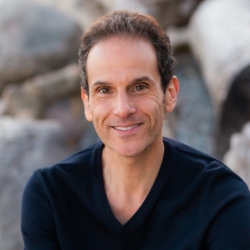
Today, Feldberg's passion is helping you extract your deep wealth. The 90-day Deep Wealth Mastery program helps create a solid foundation for three areas: increasing profits to enterprise value and optimizing post-exit life. Deep Wealth Mastery offers strategies and insights drawn from Feldberg's rich experience. The strategies from the trenches get results. Jeffrey's vision is to increase the social fabric of society one entrepreneur at a time.
Learn more through https://iapdw.com/prosper
