
What happens when the business you built for freedom becomes the role that quietly traps you?
The Founder Problem Nobody Wants To Admit
There is a moment many founders do not talk about publicly.
The business is working. Revenue is coming in. The team may be growing. The outside world sees success.
But inside, something feels off.
You are not failing. That would be easier to diagnose. You are winning in a way that no longer fits. The work that once gave you energy now drains you. The problems that once felt exciting now feel repetitive. The company that once represented freedom starts to feel like a high paying prison.
That is why this conversation with Stephen Shortt matters.
You grind for years. You build the empire. The revenue climbs. The accolades pile up. Then one day you wake up and realize the life you constructed around work no longer fits who you’re becoming.
That brutal realization sits at the heart of this powerful conversation with Founder & Success Whisperer Stephen Shortt. As CEO of Career Fit and Talent Select, Stephen has helped leaders across 45 countries escape the quiet misery of misaligned success. His frameworks — including the Happy Work Life Map and Successful Succession — cut through the noise with ruthless clarity.
Stephen grew up inside family businesses, bought both of them, sold one just before the world changed in 2020, and now helps people find work that fits and organizations build teams that last. His work is not soft reflection. It is founder relevant, operational, and painfully practical.
Because the wrong role does not just drain the founder.
It weakens the business.
Success Without Fulfillment Is Not Success
At Deep Wealth, we have a saying: all the zeros in the bank, all the accolades, all the outside validation mean absolutely nothing if there is no fulfillment.
Stephen puts language around the same founder tension from a different angle.
Many founders love the early stage. The hustle. The uncertainty. The chewing gum and spit holding the business together. The rush of solving impossible problems with a tiny team and too little time.
Then the company grows.
Suddenly, the business needs process. Systems. Meetings. Hiring. Management. Optimization. The founder who was built for creation now finds themselves buried in maintenance.
Stephen describes it through the S-curve of innovation. At the bottom of the curve, founders thrive on breaking things, creating new things, and pushing through chaos. But as the business moves toward optimization, the same founder can start to feel trapped.
That is the contradiction.
The business is more successful, but the founder is less alive.
And that is where the skeleton begins to appear.
The S-Curve That Steals Your Fire
Stephen nails the pattern almost every founder experiences:
At the bottom of the S-curve you’re in pure hustle mode — breaking things, innovating, thriving on chaos and camaraderie. Then you climb into optimization. Systems replace sweat. Board meetings replace breakthroughs. Suddenly the fire is gone.
“The founders who loved the early hustle start to feel trapped,” Stephen explains. “They long for the basement days.”
This is exactly where post-exit regret hits hardest — and why so many successful entrepreneurs still feel unfulfilled even with financial freedom.
The Hidden Cost Of Staying In The Wrong Role
When a founder stays in the wrong role too long, the cost does not show up as one clean line item.
It shows up everywhere.
Decision fatigue. Team drag. Missed opportunities. Avoided conversations. Poor delegation. Slow hiring. Founder dependency. Culture friction. A business that still runs through one person, even if everyone pretends it does not.
Stephen shared a line that every founder should sit with: “No business, no problems, but no problems, no business.”
That is the truth. A business exists to solve problems. But the founder must keep choosing the right problems. When you are solving the wrong problems, problems that should belong to someone else, problems that drain your energy, problems that keep you from strategy, growth, or your highest contribution, you are not being heroic.
You are becoming the bottleneck.
A future buyer sees that quickly. They may like the profits. They may like the brand. They may like the customer base. But if the business depends on the founder’s drive, charisma, and personal involvement, buyer confidence drops.
The business may be profitable now, but it is not ready later.
Stephen Shortt’s Authority Comes From The Trenches
Stephen is not speaking as someone who read about this in a business book.
He has lived it.
He grew up in entrepreneurial family businesses. He nearly walked away because the family tension was becoming too costly. He bought both businesses. He sold one. He now works with founders, family businesses, senior leaders, and organizations wrestling with fit, succession, hiring, and fulfillment.
He also brings the rare ability to make large life questions practical.
That matters because founders do not need more vague inspiration. They need usable frameworks that help them make better decisions under pressure.
One of Stephen’s frameworks is the HAPPY framework: highlights, appreciation, progress, people, and your contribution. It helps people identify what they actually want, not what the market, family, industry, peer group, or ego told them they should want.
His definition is sharp: “Happiness ultimately boils down to progress towards purpose.”
That sentence is simple. It is also dangerous.
Because it forces a founder to ask: am I making progress toward my purpose, or am I only feeding the machine I built?
The Happy People Project Framework
Stephen’s simple but devastatingly effective HAPPY acronym gives you a practical map:
- Highlights — What moments do you want more of?
- Appreciation — What past experiences shaped you?
- Progress — Are you moving toward what actually matters?
- People — Who energizes you?
- Your Contribution — What do you want to put into the world?
Progress toward purpose is the real key to happiness. Without it, you’re either spinning wheels or stuck in neutral.
The Dangerous Assumption Founders Keep Making
Founders often assume that because they can do something, they should do it.
That assumption quietly damages growth.
You can review the spreadsheets. You can chase the client issue. You can jump into delivery. You can handle hiring. You can save the salary. You can get it done faster than Jane, Bill, or Mary.
But the real question is not whether you can do it.
The real question is whether you should still be doing it.
Stephen said something every founder who struggles to delegate should hear: the right person may love the work you hate. They may be better suited to it, more consistent with it, and more energized by it. Even if they are not 100 percent of you, they are focused on the role in a way you are not.
You are sporadic. They are dedicated.
You fit it in between crises. They own it.
That is not a downgrade. That is leverage.
The Deep Wealth Reframe
Here is the only in Deep Wealth reframe.
Fulfillment is not a lifestyle luxury after success. Fulfillment is a business design issue.
When a founder has no life outside the business, no role clarity, no team depth, no succession thinking, and no strategy for what comes next, the business becomes emotionally and operationally fragile. The founder may call it commitment. A future buyer may call it risk.
This is where skeletons hide in plain sight.
A founder who is still central to every major decision may feel important. The buyer sees dependency. A founder who cannot fire themselves from low value work may feel responsible. The team sees mistrust. A founder who keeps tolerating the wrong role may feel resilient. The business feels drag.
And the Rembrandt?
The Rembrandt is a company where the founder is still strategically valuable but no longer operationally required. That is a stronger business to keep. It is also a stronger business to sell.
One of the most valuable insights for any founder planning growth or exit: Your identity cannot be 100% wrapped in the business.
Stephen works extensively with family businesses on succession. The biggest struggle for the current generation? They have no life beyond the title. When the business no longer needs them, they feel lost.
Start building that identity and those outside interests now — not the day after you sign the papers.
Hiring Is Where Fulfillment Becomes Operational
This conversation is not just about purpose. It is about hiring, team design, and enterprise value.
Stephen did not sugarcoat the cost of a bad hire. He said the cost can be “anywhere from three to five times that person’s salary” when you include salary, lost productivity, lost momentum, lost morale, reputational damage, rehiring, onboarding, and emotional strain.
That is the part many founders miss.
A bad hire is not just expensive. It consumes leadership capacity.
And leadership capacity is one of the most underpriced assets in a growing business.
Stephen also warns that most people are not naturally good at hiring because unconscious bias gets in the way. You like the same sports team. You connect in the interview. You mistake comfort for competence.
Then you pay for it.
The better move is to define the role based on where the business is going, not only where it is today. A company planning to scale needs talent that can scale with it. Hiring for today’s pain can create tomorrow’s ceiling.
The Question That Changes The Founder’s Options
At Deep Wealth, one of the first questions we ask is brutally simple:
Does your business run without you?
Yes or no. No stories.
Most founders do not answer yes or no. They tell stories.
That is the signal.
Stephen’s work connects directly to this. When the founder is wrapped inside the role, the business has fewer options. When the business can run without the founder, options expand.
You can keep the business forever. You can bring in investors. You can step back. You can move to the board. You can sell tomorrow. You can pursue an inside hustle, a new S-curve, a new product, a new market, or a bigger strategic move.
Options create freedom.
Founder dependency kills options.
Stephen captured the personal side of this when he said founders should ask how they identify beyond the title, role, or business. Because without that, stepping away can feel like a death.
That is not theory. That is post exit reality. Many founders discover too late that they built a company but never built a life.
The AI Warning Founders Should Not Ignore
Stephen also brings this into today’s market with a timely warning on AI.
The biggest casualties may not be the people whose work AI replaces. The biggest casualties may be the people waiting to see what happens.
That is a founder lesson.
Waiting is not strategy.
Curiosity is. Stephen calls curiosity “the number one superpower that any human can have.”
For founders, that means testing, adapting, experimenting, and refusing to sit on the sidelines while the market moves. AI may not replace you. But a founder who uses AI with human judgment, curiosity, and speed may outpace you.
That is the difference between watching disruption and using it.
Why This Episode Matters Right Now
This episode is not a soft conversation about happiness.
It is a strategic conversation about fit, growth, hiring, purpose, leadership energy, and business design.
If you are a founder who looks successful but feels drained, this episode will hit close to home.
If your team still depends on you more than they should, this episode will challenge you.
If you are scaling and hiring for today instead of where the company is going, this episode will save you pain.
If you are preparing for a future liquidity event, even years from now, this episode will remind you that the business must become valuable without requiring you at the center of every decision.
That is how you build a company that is profitable now and ready later.
Listen And Subscribe
The full conversation with Founder & Success Whisperer Stephen Shortt belongs on your must listen list because it surfaces a founder truth most people avoid: success can become a trap when the role no longer fits the person you are becoming.
Listen to the episode. Then subscribe to The Deep Wealth Podcast.
Not because subscribing is routine. Because every episode is designed to surface the hidden skeletons, Rembrandts, X-Factors, and founder decisions that affect profits, enterprise value, freedom, and life after the exit.
The next costly blind spot rarely announces itself.
Subscribe now so you catch it before it becomes expensive.
**
Whether you plan to keep your business or sell it one day, build it so it can thrive without you.
In 90 days, Deep Wealth Mastery helps you uncover the blind spots, profit leaks, and hidden strengths that make your company stronger, more profitable, and more valuable.
The ONLY system built from a 9-figure exit deal.
Start your Deep Wealth Mastery journey here**
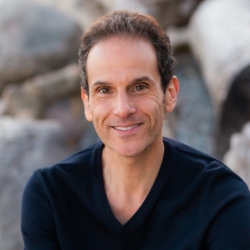
Today, Feldberg's passion is helping you extract your deep wealth. The 90-day Deep Wealth Mastery program helps create a solid foundation for three areas: increasing profits to enterprise value and optimizing post-exit life. Deep Wealth Mastery offers strategies and insights drawn from Feldberg's rich experience. The strategies from the trenches get results. Jeffrey's vision is to increase the social fabric of society one entrepreneur at a time.
Learn more through https://iapdw.com/prosper