
What if the most dangerous part of your exit starts the moment the money arrives?
Winning the deal is not the finish line
Most founders make the same assumption.
The hard part is building the company. Then comes the process. Then comes diligence. Then comes the deal. Then comes relief.
That sounds right. It even sounds earned.
But what if the deal is not the end of pressure? What if it is the beginning of a different pressure, one that is harder to name because outwardly you are now the person who has won?
That is the tension underneath this conversation with Tad Fallows.
He is not talking about theory. He bootstrapped a software company, grew it to nearly 100 employees, sold it to a strategic buyer, and then lived what too many founders never prepare for. One day he went from having most of his net worth tied up in one illiquid company to adding two zeros to his liquid net worth in a single day. New freedom arrived. So did new questions.
That is the truth no one tells you about after your big exit.
Why most post-exit advice falls ahort
Tad built Long Angle as a private community for first-generation wealth creators, now nearly 8,000 members strong. No membership fees. Rigorous screening to ensure peer-to-peer learning, not solicitation. A safe space where high achievers speak openly about money, family, risk, and meaning without anyone trying to sell them products.
The core insight? Money solves old problems and creates new ones. A strained marriage doesn’t heal with more zeros. Poor health doesn’t vanish. And the pressure of stewarding serious wealth can quietly erode peace of mind even when the bank balance screams success.
The hidden cost of not preparing for post-exit life
A founder who does not prepare for life after the exit creates a new class of skeletons.
They are not always financial. In fact, the most expensive ones often are not.
You can become bored, restless, emotionally untethered, and far more vulnerable to bad decisions than you were before. You can mistake activity for purpose. You can mistake access for wisdom. You can mistake liquidity for peace.
Tad says it plainly: “Your problems are not gonna go away, even if you all of a sudden have $10 million or 20 million.”
That line matters because it exposes a contradiction founders rarely want to face.
If your marriage is strained before the deal, money does not heal it. If your health is neglected before the deal, money does not fix that either. If your identity has been welded to the company, then the sale can feel less like freedom and more like disorientation.
This is where founders get blindsided. The external scoreboard says success. The internal experience says uncertainty. And that gap can quietly create stress spillover, weak decisions, and a very expensive search for meaning.
The human side no one talks about
Tad is direct: problems don’t disappear with money—they change flavor. Hedonic adaptation sets in fast. The massive new house becomes “just the house.” The same frustrations persist, only louder. Many with $25 million still feel emotional paycheck-to-paycheck anxiety.
Family conversations become critical. Tad advocates transparency with kids—they’ll Google the exit anyway. Better they hear the story of hard work, luck, and values from you directly. Open dialogue prevents shame or entitlement and models honesty.
For many, the search for meaning intensifies once survival needs vanish. What now? How do I give back? What’s my purpose when the next payroll isn’t on the line?
There are plenty of people who will talk to founders about wealth after an exit.
Most of them are paid to sell something.
That is precisely why Tad is so relevant. He built Long Angle because he saw a problem that most advisors cannot solve. Founders and first-generation wealth creators need a place where they can ask real questions without being sold to, judged, or treated like a target account.
That matters because post-exit truth is hard to access.
Tad describes how questions change after liquidity. Before the exit, you might ask ordinary peer questions. After the exit, the questions become more nuanced, more sensitive, and harder to ask in the wrong room. Family purpose. Estate structures. New risk. Identity. Kids. Meaning. The right advisors. The wrong advisors. How much complexity is too much complexity.
That is a rare X-Factor in itself. Not just information, but a trusted environment where founders can speak honestly.
The dangerous assumption that creates post-exit pain
Here is the blind spot.
Most founders think they will figure it out later.
They tell themselves they are too busy now. Get through the sale first. Handle the process. Deal with post-exit life when it arrives.
That is understandable. It is also dangerous.
Tad’s advice is the opposite of the typical high achiever instinct. Do not rush into irreversible moves. Do not suddenly redesign your life in the first six to twelve months. Do not confuse the emotional high of liquidity with clarity.
Instead, he recommends taking a pause and getting the basics right.
As he puts it, “Don’t make any rash changes in the first six or 12 months.”
That one line can save a founder years of regret.
Because the founder right after the exit is not the same founder one year later. Your priorities evolve. Your energy changes. Your identity changes. The noise around you changes. The people around you change.
That is not weakness. That is reality.
The only in Deep Wealth reframe
At Deep Wealth, we teach founders to think like future buyers long before a sale. This episode extends that mindset into a place most people miss entirely.
You are not just preparing for a deal. You are preparing for who you will be after the deal.
That is not soft thinking. That is strategic thinking.
A founder who prepares for post-exit life makes better pre-exit decisions. They choose advisors more carefully. They build with more intention. They avoid the trap of chasing “any deal” instead of the best deal. They think about enterprise value and personal readiness at the same time.
That is profitable now and ready later.
Most founder education stops at the transaction. Deep Wealth does not. Because a great liquidity event that leads to a chaotic post-exit life is still a broken outcome. The real objective is not just money. It is deal certainty, strategic positioning, and a post-exit narrative that does not collapse under its own weight.
That is only in Deep Wealth territory.
The breakthroughs founders need to hear before they need them
This episode surfaces several truths founders usually learn the hard way.
First, the right investment banker can change everything. Tad calls hiring one “the best money we ever spent.” That is not casual praise. It came from lived experience, and it echoes what sophisticated founders discover when they stop trying to run a once-in-a-lifetime process with beginner pattern recognition.
Second, more money does not necessarily create more calm. Tad says there are “plenty of people with $25 million who still feel like, although intellectually they know it’s not true emotionally, they still feel like they’re paycheck to paycheck.”
Third, meaning does not magically appear after liquidity. In some cases, it becomes more urgent. If money is no longer the excuse, then the harder question arrives. What now?
That question hits founders differently. Some hide from it. Some spend around it. Some work around it. Some make the mistake of believing the next investment, the next house, the next project, or the next status move will answer it.
Usually it does not.
Urgent advice for post-exit founders and founders about to exit
The most expensive founder blind spots are the ones that arrive after everyone else thinks you have won.
That is why this episode matters.
Listen to the full conversation with Tad Fallows on The Deep Wealth Podcast. Then subscribe. Not because subscribing is polite. Because this is how you keep surfacing the skeletons that quietly destroy value, peace, and optionality before they get expensive.
And if this episode hits a nerve, take that seriously.
It may be telling you that your next level of preparation is not just about the deal. It is about the founder who has to live with what comes after it. That is exactly where Deep Wealth Mastery becomes valuable for founders who want stronger profits, higher enterprise value, and a post-exit life that actually deserves the name freedom.
The host of The Deep Wealth Podcast and post exit entrepreneur Jeffrey Feldberg speaks with Tad Fallows, Long Angle Founder.
Winning the deal is not the finish line
Most founders make the same assumption.
The hard part is building the company. Then comes the process. Then comes diligence. Then comes the deal. Then comes relief.
That sounds right. It even sounds earned.
But what if the deal is not the end of pressure? What if it is the beginning of a different pressure, one that is harder to name because outwardly you are now the person who has won?
That is the tension underneath this conversation with Tad Fallows.
He is not talking about theory. He bootstrapped a software company, grew it to nearly 100 employees, sold it to a strategic buyer, and then lived what too many founders never prepare for. One day he went from having most of his net worth tied up in one illiquid company to adding two zeros to his liquid net worth in a single day. New freedom arrived. So did new questions.
That is the truth no one tells you about after your big exit.
The hidden cost of not preparing for post-exit life
A founder who does not prepare for life after the exit creates a new class of skeletons.
They are not always financial. In fact, the most expensive ones often are not.
You can become bored, restless, emotionally untethered, and far more vulnerable to bad decisions than you were before. You can mistake activity for purpose. You can mistake access for wisdom. You can mistake liquidity for peace.
Tad says it plainly: “Your problems are not gonna go away, even if you all of a sudden have $10 million or 20 million.”
That line matters because it exposes a contradiction founders rarely want to face.
If your marriage is strained before the deal, money does not heal it. If your health is neglected before the deal, money does not fix that either. If your identity has been welded to the company, then the sale can feel less like freedom and more like disorientation.
This is where founders get blindsided. The external scoreboard says success. The internal experience says uncertainty. And that gap can quietly create stress spillover, weak decisions, and a very expensive search for meaning.
The dangerous assumption that creates post-exit pain
Here is the blind spot.
Most founders think they will figure it out later.
They tell themselves they are too busy now. Get through the sale first. Handle the process. Deal with post-exit life when it arrives.
That is understandable. It is also dangerous.
Tad’s advice is the opposite of the typical high achiever instinct. Do not rush into irreversible moves. Do not suddenly redesign your life in the first six to twelve months. Do not confuse the emotional high of liquidity with clarity.
Instead, he recommends taking a pause and getting the basics right.
As he puts it, “Don’t make any rash changes in the first six or 12 months.”
That one line can save a founder years of regret.
Because the founder right after the exit is not the same founder one year later. Your priorities evolve. Your energy changes. Your identity changes. The noise around you changes. The people around you change.
That is not weakness. That is reality.
The only in Deep Wealth reframe
At Deep Wealth, we teach founders to think like future buyers long before a sale. This episode extends that mindset into a place most people miss entirely.
You are not just preparing for a deal. You are preparing for who you will be after the deal.
That is not soft thinking. That is strategic thinking.
A founder who prepares for post-exit life makes better pre-exit decisions. They choose advisors more carefully. They build with more intention. They avoid the trap of chasing “any deal” instead of the best deal. They think about enterprise value and personal readiness at the same time.
That is profitable now and ready later.
Most founder education stops at the transaction. Deep Wealth does not. Because a great liquidity event that leads to a chaotic post-exit life is still a broken outcome. The real objective is not just money. It is deal certainty, strategic positioning, and a post-exit narrative that does not collapse under its own weight.
That is only in Deep Wealth territory.
What this means for founders right now
Even if your exit is years away, this conversation matters today.
If you are building with founder dependency, ignoring life after the deal, or assuming your personal clarity can wait, you are carrying invisible risk. That risk can distort negotiations, weaken judgment, and make you more vulnerable to pressure when the stakes are highest.
This also applies if you never plan to sell.
Why?
Because the post-exit blind spot is really a broader founder blind spot. It asks whether your company, your wealth, and your identity are too fused together. It asks whether your success is giving you options or quietly narrowing them. It asks whether you are building freedom or becoming a prisoner of success.
That is not abstract. It shows up in decision fatigue, family strain, stress accumulation, and the inability to answer what winning is actually for.
Tad offers one especially practical move. Handle the financial basics first, then slow down. Insurance. Simple planning. Sound structure. Enough order to protect what you built. Then give yourself room before making major life changes.
That is preparation. And preparation is the gift that keeps on giving.
Why you really need to know but probably don’t
This is not an episode about getting rich.
It is an episode about what wealth exposes.
That difference matters.
If you are nearing a liquidity event, this conversation can help you avoid dumb mistakes that look sophisticated in the moment. If you are already post-exit, it can help you put language around challenges you may have felt but never fully named. If you are still scaling, it will sharpen how you think about success, control, and what your future buyer is really buying.
Tad does not offer recycled wealth advice. He offers something better: hard-won perspective from the other side of the finish line.
And if you are serious about building a company that you can keep forever or sell tomorrow, while also preparing yourself for what comes next, that is exactly the kind of conversation you need more of.
Your takeaway that changes everything
The most expensive founder blind spots are the ones that arrive after everyone else thinks you have won.
That is why this episode matters.
Listen to the full conversation with Tad Fallows on The Deep Wealth Podcast.
It may be telling you that your next level of preparation is not just about the deal. It is about the founder who has to live with what comes after it. That is exactly where Deep Wealth Mastery becomes valuable for founders who want stronger profits, higher enterprise value, and a post-exit life that actually deserves the name freedom.
**
_What if 90 days was all it took to radically transform your business’s profitability? Discover Deep Wealth Mastery, the only system derived from a 9-figure deal. Ready to welcome your financial freedom? Start your transformative journey today. _Click here to start your journey_**
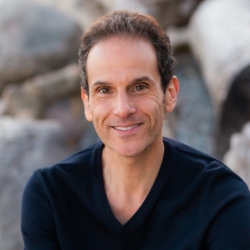
Today, Feldberg's passion is helping you extract your deep wealth. The 90-day Deep Wealth Mastery program helps create a solid foundation for three areas: increasing profits to enterprise value and optimizing post-exit life. Deep Wealth Mastery offers strategies and insights drawn from Feldberg's rich experience. The strategies from the trenches get results. Jeffrey's vision is to increase the social fabric of society one entrepreneur at a time.
Learn more through https://iapdw.com/prosper