

What if the business you are building is quietly taking from the life you thought it would protect?
The Founder Tension Most Normalize
A founder can look successful from the outside and still feel the cost privately.
The company is growing. The calendar is full. The team needs answers. Customers need attention. Investors, lenders, suppliers, family, employees, and advisors all want something. You tell yourself this is the season where you push harder. You tell yourself you will repair the damage later.
Later is the dangerous word.
Wall Street Exit to Health CEO John Oberg did not come into this conversation selling theory. He came in with the scars, the pivots, the exits, the faith, the health mission, and the rare honesty of a founder who has seen the game from more than one side of the table.
The uncomfortable lesson is not that growth is bad.
The lesson is that growth without deliberate choices becomes a silent tax. It taxes your health. It taxes your relationships. It taxes your judgment. It taxes the version of you the business needs most.
Most founders learn this too late.
The Hidden Cost Of Winning The Wrong Way
Founders love to talk about sacrifice because sacrifice sounds noble.
But there is a difference between sacrifice and silent self destruction.
You skip the workout because the board deck matters. You miss dinner because the client matters. You sleep less because the opportunity matters. You stop calling friends because the company matters. None of this feels dramatic in the moment. It feels responsible.
That is the trap.
John makes the point clearly when he says, “mental health and physical health matter a lot.” Then he connects the dots founders often ignore. These are not soft issues. They “create energy and space for the smart thinking, for the good decision making.”
There it is.
Health is not a side project. Health is decision infrastructure.
And for a founder, decision quality compounds. One tired decision rarely destroys enterprise value. But hundreds of tired decisions over months and years create drift. The wrong hire. The delayed conversation. The ignored warning sign. The strategic bet made from ego instead of clarity.
That is how a skeleton forms quietly inside the business.
From Wall Street to a Billion Lives
Today John is all-in on Precina Health and delivering life-changing results for type 2 diabetes patients, especially in rural and underserved communities. His ambition isn’t modest. He wants to change the trajectory for a billion people.
And he’s doing it by rejecting the status quo of “manage the disease” and instead focusing on reversal through lifestyle medicine, technology, and genuine care.
Why John Oberg Has Earned The Right To Say This
John Oberg is not a wellness commentator borrowing business language.
He has built, exited, invested, consulted, and now leads Precina Health, a company focused on reversing type 2 diabetes and chronic metabolic issues through a more complete model of care. He has seen professional success, family loss, mission driven work, and the real consequences of health ignored until it becomes a crisis.
He also understands what many founders refuse to admit.
The business is not separate from the founder’s operating system.
Your values show up in your calendar. Your priorities show up in your checkbook. Your health shows up in your patience. Your stress shows up in your team. Your relationships show up in your leadership.
One of John’s mentors gave him a lesson that hit like a freight train. John wanted to explain his values and beliefs. The mentor said, “Just show me your checkbook and your calendar. I’ll tell you what your priorities are.”
That is not a quote you forget.
A founder can claim family matters, health matters, faith matters, team matters, legacy matters. But the calendar does not lie. The bank statement does not lie. The body does not lie.
The Dangerous Assumption Behind Founder Burnout
The dangerous assumption is simple.
I will fix it later.
I will fix my health after the raise.
I will fix my marriage after the launch.
I will fix my leadership team after this quarter.
I will fix my life after the exit.
No, you probably will not.
You will bring the same patterns into the next chapter unless you deliberately build a different operating system now.
John talked about writing a life plan since he was 19 years old. Not a rigid fantasy plan. A directional anchor. A way to ask: what do I want my life to look like 10 years from now, and what must I do today to make that possible?
He said, “I’ve given myself permission to be wrong about the 10 year thing because the only consistency in all those documents is they’ve all been wrong.”
That is the point.
The value is not prediction. The value is direction.
Most founders do not need more goals. They need a stronger filter. Without a filter, every opportunity looks urgent. Every request looks important. Every deal looks like it deserves attention. That is how founders become the bottleneck in businesses they built to create freedom.
John gets brutally honest about the founder trap: believing you can destroy your health now and fix it after the exit. He gained 50 pounds while earning his doctorate and studying metabolic disease — a wake-up call he’ll never forget.
His message is clear: health and high performance are not enemies. They fuel each other. The most successful founders he knows protect their energy deliberately — because willpower eventually breaks, but systems and habits win.
The Only In Deep Wealth Reframe
Here is the Deep Wealth reframe.
A future buyer is not only buying your revenue, margins, systems, or market position. A future buyer is also judging the quality of leadership capacity behind the business.
If the founder is exhausted, reactive, overextended, and secretly holding the company together through personal willpower, that is not strength. That is risk.
A healthy founder creates better decisions. Better decisions create stronger teams. Stronger teams create more scalable systems. More scalable systems create less founder dependency. Less founder dependency increases enterprise value and deal certainty.
This is why health belongs in the same conversation as profitability, culture, preparation, and exit readiness.
Not because it sounds enlightened.
Because a future buyer will eventually test whether the business performs without the founder being the emergency nervous system of the company.
If the answer is no, enterprise value takes the hit.
As both a founder and active investor, John reveals exactly what he looks for before writing a check. It’s not the slick pitch deck. It’s the team. The unfair advantage. The ability to listen, adapt, and execute with real industry insight.
He warns: surround yourself with people who’ve lived the battles you’re fighting or prepare to pay the price.
The Lesson Most Founders Learn Too Late
John does not argue for balance in the soft, overused way people throw that word around. He uses a better word: deliberate.
He said, “I didn’t actually value balance. I valued deliberateness.”
That one line is worth sitting with.
Balance often becomes another vague ideal founders feel guilty about missing. Deliberateness is different. Deliberateness forces a choice. It asks where your time, treasure, talent, health, attention, and relationships are actually going.
That matters because the founder’s life becomes the company’s rhythm.
If you are always urgent, the company becomes urgent.
If you are always reactive, the team becomes reactive.
If you never recover, the culture learns exhaustion.
If you never delegate, the company learns dependency.
If you never ask better questions, the business keeps paying for bad answers.
And yes, the business may still grow.
That is what makes the lesson so costly. Growth can hide dysfunction longer than failure can.
The Breakthrough John Teases But Does Not Oversimplify
John refuses the false choice that many founders secretly use as an excuse.
He says, “I reject the false dichotomy that you can’t do both.”
He is talking about business success and health. The founder story usually says you must choose. Build now, recover later. Grind now, live later. Sacrifice health now, buy it back later.
That sounds tough.
It is often just poor strategy with better branding.
John is not saying every founder must become an elite athlete. He is saying the basics matter and they are closer than most founders pretend. Walk. Eat better. Build structure. Create accountability. Protect the glass balls.
He uses the image of glass balls and rubber balls. Some things can drop and bounce. Some things break. For John, the first three workouts are glass balls. The fourth and fifth are rubber balls.
Every founder needs to know the difference.
Because when everything feels urgent, nothing gets protected.
Founder Application For Right Now
Take this episode and apply it where it hurts.
Look at your calendar. What does it say you value?
Look at your team. Are they calmer because you lead, or more anxious because you react?
Look at your health. Is it creating capacity, or quietly reducing the quality of your decisions?
Look at your business. Is growth creating freedom, or just increasing the size of the machine that depends on you?
Look at your future. Are you building a company that could be attractive to a future buyer, or a company that only works because you keep paying the price personally?
This is where Deep Wealth Mastery Growth, Deep Wealth Mastery Exit, and Deep Wealth Mastery Health intersect.
Growth is not just more revenue.
Exit readiness is not just cleaner financials.
Health is not just personal improvement.
Together, they shape whether you can keep your thriving and profitable business forever or sell it tomorrow.
Why The Full Episode Matters
This article barely scratches the surface.
The full conversation goes into mentorship, values, faith, life planning, trust, ambition, health, metabolic disease, post exit identity, and the founder courage required to pursue a mission that is bigger than money.
John shares why he now measures success in lives improved, not dollars alone. He also reveals the humility behind bold ambition, the kind of humility most founders need but rarely cultivate early enough.
One of the most powerful moments comes when John says, “We’re gonna be billionaires. We don’t measure in dollars, we measure in the number of lives we’ve improved.”
That is not anti-profit.
That is profit placed inside a larger purpose.
For founders, that distinction matters. Purpose without profit is fragile. Profit without purpose can become hollow. The strongest companies find a way to hold both.
Learn The “One Thing” Before The Lesson Gets Expensive
The founder lesson most learn too late is not hidden because it is complicated.
It is hidden because the business gives you permission to ignore it.
The next deal, the next hire, the next launch, the next quarter, the next crisis. They all feel louder than your health, your values, your family, your clarity, and your future self.
Until they are not.
Listen to Wall Street Exit to Health CEO John Oberg in this episode of The Deep Wealth Podcast. Then subscribe so the next costly blind spot finds you before it becomes expensive.
This is why The Deep Wealth Podcast exists. Not to give founders more noise. To surface the truths that increase profits, protect enterprise value, strengthen leadership, and help you build a business and life you would be proud to keep forever or sell tomorrow.
The lesson is too expensive to learn late.
**
_What if 90 days was all it took to radically transform your business’s profitability? Discover Deep Wealth Mastery, the only system derived from a 9-figure deal. Ready to welcome your financial freedom? Start your transformative journey today. _Click here to start your journey_**
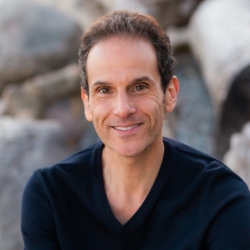
Today, Feldberg's passion is helping you extract your deep wealth. The 90-day Deep Wealth Mastery program helps create a solid foundation for three areas: increasing profits to enterprise value and optimizing post-exit life. Deep Wealth Mastery offers strategies and insights drawn from Feldberg's rich experience. The strategies from the trenches get results. Jeffrey's vision is to increase the social fabric of society one entrepreneur at a time.
Learn more through https://iapdw.com/prosper
